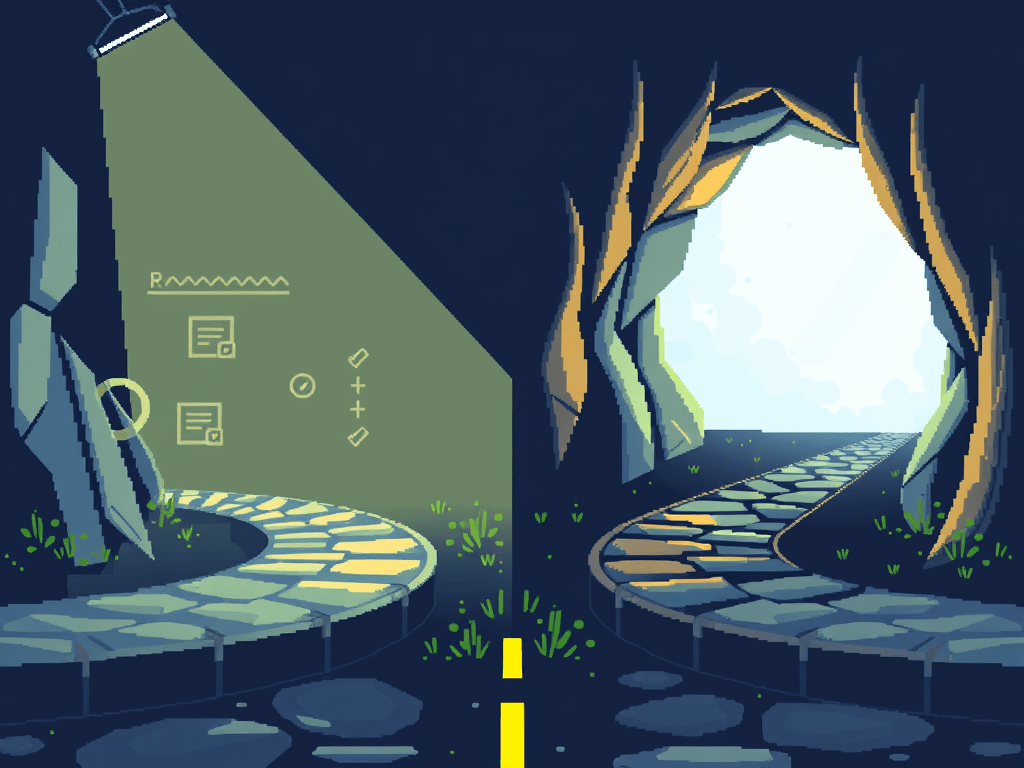
Or, Why You Still Feel Lost Even When Every Task Has an Owner
A few years ago, I sat in a meeting where the head of operations said:
“We already have project managers. Why do we need product managers?”
A brief silence.
Then someone chimed in,
“Aren’t they just like PMs… but with fancier slides?”
Everyone chuckled.
Meanwhile, I—the product manager—just smiled awkwardly and sipped my coffee.
That was the day I realized: most people think they understand product management.
But what they really understand is project management.
And while the words sound similar, the jobs couldn’t be more different.
Let’s unpack it—with stories, not slides.
👷🏽♂️ Project Management: Getting Things Done on Time
Imagine you’re building a house.
The project manager is the one who makes sure:
- The foundation is laid by Week 2
- The tiles are delivered by Thursday
- The electrician shows up on time
- No one goes wildly over budget
They manage the how.
They track dependencies, timelines, risks, and resource allocation.
They’re experts in execution. And they’re vital.
Without them, the house never gets built.
But here’s the kicker…
🧭 Product Management: Figuring Out What House to Build (and Why Anyone Would Live in It)
Now imagine you ask:
- “Should this be a 2-bedroom or a studio?”
- “Are we building for a family or a digital nomad?”
- “Do people even want to live here—or do they just need a co-working space?”
Those are product questions.
Product management is about:
- Who are we building for?
- What problem are we solving?
- Is this solution actually valuable?
- Should we even build this at all?
PMs own the why.
And they work cross-functionally to turn that “why” into something users love and use.
🧪 Real-Life Story: The Time a Project Was Perfectly Executed… and Totally Useless
At one company I worked with, a team flawlessly executed a complex dashboard feature.
It had filters, charts, export options—you name it.
The project manager ran a tight ship:
- Timelines? ✅
- QA sign-off? ✅
- Stakeholder updates? ✅
But post-launch, something weird happened: no one used it.
Turns out, users didn’t want more charts.
They wanted insights.
The real pain was not the lack of data—but the lack of decisions.
We had built a beautiful solution to the wrong problem.
That’s why product management matters.
You can deliver on time and on budget—and still completely miss the point.
📊 So… What’s the Actual Difference?
| Aspect | Project Management | Product Management |
|---|---|---|
| Purpose | Deliver the plan | Define the right problem & solution |
| Success looks like | On time, on budget, on spec | Solved problem, customer impact, business value |
| Tools used | Gantt charts, trackers, Jira, status updates | User interviews, OKRs, roadmaps, prototypes |
| Stakeholder focus | Internal teams, resource alignment | Users, customers, cross-functional teams |
| Ownership | Process | Outcome |
A project manager asks:
“Are we doing it right?”
A product manager asks:
“Are we doing the right thing?”
🔄 Do You Need Both? Absolutely.
The best teams I’ve worked with had:
- Product managers to define what and why
- Project managers to make sure the how gets delivered
One finds the right mountain to climb.
The other brings the ropes, maps, and gear.
Together, they ship products that work and matter.
⚠️ What Happens When You Confuse the Two
If you treat your project manager like a product manager, they’ll spend time chasing clarity they don’t have the tools to define.
If you treat your product manager like a project manager, they’ll spend time updating timelines instead of talking to users.
The result?
Burned-out teams, wasted sprints, missed opportunities—and lots of well-built features that no one asked for.
Final Thoughts: Product vs. Project Isn’t a Fight—It’s a Partnership
You wouldn’t ask your architect to pour the cement.
You wouldn’t ask your builder to redesign the floorplan halfway through.
And you shouldn’t ask your project manager to validate product-market fit.
Or your product manager to create daily burn charts.
Product management exists because building the thing right is not the same as building the right thing.
So the next time someone says,
“We already have project managers. Why do we need product?”
Smile and say:
“Because the riskiest part of building isn’t execution—it’s assumption.”



 product.guru
Leave a comment